
Hisense
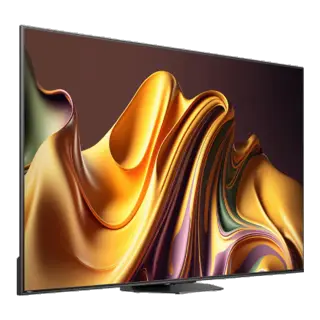
Hisense U8N Mini-LED TV
TVs
$1,299List price
Explore this product Your shortlist, side by side
Find the differences that matter for your next decision.
TVs
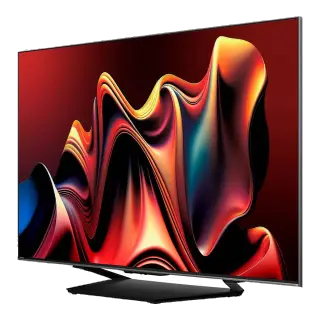
TVs
Start with all rankable specifications, or focus on a particular use.
Your starting point
We compare the published specifications relevant to your priority. Each rankable specification counts once; your selected requirements can rule a product out. This is a guide to the numbers, not a laboratory performance score.
Input lag (4K 120, game mode): ~6.2 ms vs ~6.5 ms at 120Hz / ~13 ms at 60Hz
Hisense U7N Mini-LED is $500 cheaper. Pay the difference only if peak brightness (hdr) matters to you.
The trade-off to know
Hisense U8N Mini-LED TV: Noticeable blooming off-angle
Look at the differences ↓Side by side
Start with the key specs, then explore as much as you need.
| What you’re comparing | Hisense U8N Mini-LED TV | Hisense U7N Mini-LED TV |
|---|---|---|
| Panel typePicture | Mini-LED QLED (VA) | Mini-LED ULED (VA with quantum dot) |
| Native refresh ratePicture | 144 Hz | 144 Hz native |
| Peak brightness (HDR)Picture | ~3,000 nits HDR | Up to 1,500 nits peak brightness |
| ContrastPicture | High native contrast + dynamic local dimming | High contrast with full array local dimming |
| HDMI 2.1 portsGaming | 2 (of 4 HDMI total) | 2 (HDMI ports 3 and 4 support 4K 144Hz; port 3 supports eARC) |
Showing 5 of 28 specifications. Missing values stay unlisted. About the sources
Both sides of the decision
Beyond the spec sheet
Explore the ownership details available for this pair.
Hisense sibling models compared across generations.
Our recommendation: Compare the spec differences below to see if the price premium justifies the newer model's additions.
Real-world physical measurements for credenza width, soundbar clearance, and wall mounting.
TV Stand & Table Footprint
Heavy metal center pedestal base with cable clips
Standard pedestal or dual-foot support
Soundbar Clearance
2.9 in clearance above base
Standard clearance
Wall Mount Profile & Depth
1.8 in uniform depth; standard VESA 400x400
Standard VESA wall depth
Documented ergonomic quirks, hardware annoyances, and maintenance realities reported by real owners.
U8N Mini-LED: What to watch for
Smart TV interface runs sponsored ads and banner recommendations.
Thin integrated TV speakers lack low-end bass punch.
U7N Mini-LED: What to watch for
Smart TV interface runs sponsored ads and banner recommendations.
Thin integrated TV speakers lack low-end bass punch.
Know what’s behind the comparison
Clinchmark compares manufacturer specifications and other published information. We have not independently lab-tested these products. Editorial assessments and unknown values are identified in the specification details.
Catalog snapshot: September 1, 2026. Prices, availability, and provider terms can change.
Hisense U7N Mini-LED costs $500 less at list price.
Both has this deal-breaker: only two HDMI 2.1 ports. A PS5, an Xbox and a 4K120 PC cannot all connect at full bandwidth, and one port doubles as eARC.
Too close to call on gaming from the spec sheets. Only input lag (4k 120, game mode) is rankable here. HDMI 2.1 ports: 2 vs 2 4K 120Hz: Yes vs Yes
Of the 28 specs tracked here, 25 are descriptive and cannot be ranked on numbers alone. Spec sheets also cannot measure subjective factors like build quality, real-world performance, or comfort.