
Sony
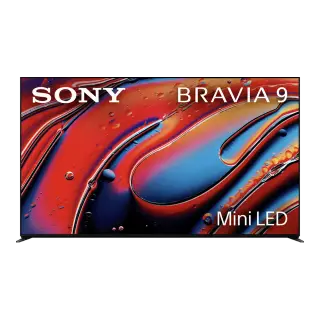
Sony BRAVIA 9 Mini-LED TV
TVs
$3,299List price
Explore this product Your shortlist, side by side
Find the differences that matter for your next decision.
TVs
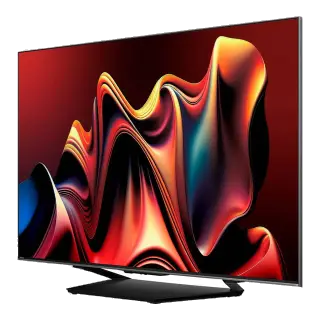
TVs
Start with all rankable specifications, or focus on a particular use.
Your starting point
We compare the published specifications relevant to your priority. Each rankable specification counts once; your selected requirements can rule a product out. This is a guide to the numbers, not a laboratory performance score.
Input lag (4K 120, game mode): ~6.5 ms at 120Hz / ~13 ms at 60Hz vs ~8.5 ms
It is also $2,500 cheaper.
Side by side
Start with the key specs, then explore as much as you need.
| What you’re comparing | Sony BRAVIA 9 Mini-LED TV | Hisense U7N Mini-LED TV |
|---|---|---|
| Panel typePicture | Mini-LED QLED (VA) | Mini-LED ULED (VA with quantum dot) |
| Native refresh ratePicture | 120 Hz | 144 Hz native |
| Peak brightness (HDR)Picture | ~3,000–3,500 nits HDR | Up to 1,500 nits peak brightness |
| ContrastPicture | Extremely high (thousands of dimming zones) | High contrast with full array local dimming |
| HDMI 2.1 portsGaming | 2 (of 4 HDMI total) | 2 (HDMI ports 3 and 4 support 4K 144Hz; port 3 supports eARC) |
Showing 5 of 28 specifications. Missing values stay unlisted. About the sources
Both sides of the decision
Beyond the spec sheet
Explore the ownership details available for this pair.
Real-world physical measurements for credenza width, soundbar clearance, and wall mounting.
TV Stand & Table Footprint
4-way versatile stand (wide, narrow, standard, soundbar height)
Standard pedestal or dual-foot support
Soundbar Clearance
Soundbar position gives 3.5 in vertical clearance
Standard clearance
Wall Mount Profile & Depth
1.9 in Mini LED chassis with seamless edge frame
Standard VESA wall depth
Documented ergonomic quirks, hardware annoyances, and maintenance realities reported by real owners.
Sony: What to watch for
Smart TV interface runs sponsored ads and banner recommendations.
Thin integrated TV speakers lack low-end bass punch.
Hisense: What to watch for
Smart TV interface runs sponsored ads and banner recommendations.
Thin integrated TV speakers lack low-end bass punch.
Know what’s behind the comparison
Clinchmark compares manufacturer specifications and other published information. We have not independently lab-tested these products. Editorial assessments and unknown values are identified in the specification details.
Catalog snapshot: September 1, 2026. Prices, availability, and provider terms can change.
Hisense U7N Mini-LED costs $2,500 less at list price.
Both has this deal-breaker: only two HDMI 2.1 ports. A PS5, an Xbox and a 4K120 PC cannot all connect at full bandwidth, and one port doubles as eARC.
For gaming, buy the Hisense U7N Mini-LED. Leads 2 of 2 rankable gaming specs. Input lag (4K 120, game mode): ~6.5 ms at 120Hz / ~13 ms at 60Hz vs ~8.5 ms
Of the 28 specs tracked here, 23 are descriptive and cannot be ranked on numbers alone. Spec sheets also cannot measure subjective factors like build quality, real-world performance, or comfort.