Skip to content
Clinchmark

Head to head

Razer Blade 16 (2024) vs ASUS ROG Zephyrus G14 (2024)

Razer Blade 16 (2024) leads 5 to 3 on the 8 rankable specs, but ASUS ROG Zephyrus G14 (2024) costs $1,400 less.

Catalog as of September 1, 2026

Why, in numbers

Manufacturer list price, not a live offer. Confirm current pricing before you buy.

Razer Blade 16 (2024)
$2,9995 spec wins
Swap
Swap

Buying for

Every rankable spec counts once. Pick a lens to score only what matters for your laptop.

Your devices

Select your ecosystem to flag non-functional features or platform lock-in.

Straight answer

Overall: 5 to 3

Buy the Razer Blade 16.

  • Leads 5 of 8 rankable overall specs; ASUS ROG Zephyrus G14 takes 3.
  • Memory: 32GB DDR5 vs 16 GB LPDDR5X
  • Size: 16.0 inches vs 14.0 inches
  • ASUS ROG Zephyrus G14 is $1,400 cheaper. Pay the difference only if memory matters to you.

Check first: the Razer Blade 16 weighs over 4 lb (1.8 kg). Tick them under deal-breakers if that rules it out.

5 Razer Blade 168 rankable of 29 specsASUS ROG Zephyrus G14 3

Deal-breakers

tick what would make you walk away

  • row

    No pen or touch input for marking up PDFs or sketching.

    Trips:Razer Blade 16 · NoTrips:ASUS ROG Zephyrus G14 · No
  • row

    The memory you buy today is the memory you keep.

    Clear:Razer Blade 16 · Yes (2× SO-DIMM slots up to 96GB)Trips:ASUS ROG Zephyrus G14 · No (soldered LPDDR5X)
  • row

    Heavy in a backpack on a daily commute.

    Trips:Razer Blade 16 · 5.4 lbClear:ASUS ROG Zephyrus G14 · 3.31 lb

At a glance

The handful of numbers that decide most purchases in this category.

4 of 4 differ

Panel

Razer

Dual-Mode Mini-LED (UHD+ / FHD+)

ASUS

ROG Nebula OLED

Processor

Razer

Intel Core i9-14900HX

ASUS

AMD Ryzen 9 8945HS (8 cores / 16 threads, Ryzen AI NPU)

Memory

Razer

32GB DDR5

ASUS

16 GB LPDDR5X (6400MHz)

Claimed battery life

Razer

~4–6 hours mixed use

ASUS

Up to 10 hours productivity / ~1.5 hours gaming

The 90-Day Owner Regret Check

Documented ergonomic quirks, hardware annoyances, and maintenance realities reported by real owners.

Post-Purchase Truths

Razer: What to watch for

  • Maintenance

    Requires ongoing care to maintain peak out-of-box performance.

    Regular cleaning, firmware updates, and standard care are recommended to preserve longevity.

ASUS: What to watch for

  • Maintenance

    Requires ongoing care to maintain peak out-of-box performance.

    Regular cleaning, firmware updates, and standard care are recommended to preserve longevity.

Display

leads 3-0
Display specifications. Middle column is Razer Blade 16 (2024), right column is ASUS ROG Zephyrus G14 (2024).
Size16.0 inches (wins this row: higher)14.0 inches
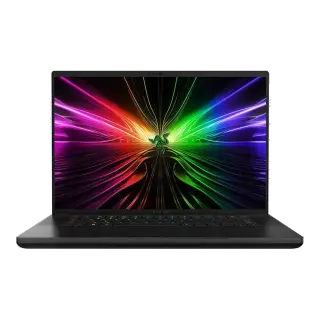
PanelDual-Mode Mini-LED (UHD+ / FHD+)ROG Nebula OLED
Resolution3840 × 2400 (4K) / 1920 × 1200 (FHD) (wins this row: higher)2880 × 1800 (16:10, 3K)
Refresh rate120 Hz (4K) / 240 Hz (FHD)120 Hz (0.2 ms response time, G-Sync)
BrightnessNot on the official sheet1,000 nits HDR peak / 600 nits SDR (wins this row: higher)500 nits peak HDR
Color100% DCI-P3100% DCI-P3
TouchscreenNoNo

Performance

leads 2-0
Performance specifications. Middle column is Razer Blade 16 (2024), right column is ASUS ROG Zephyrus G14 (2024).
ProcessorIntel Core i9-14900HXAMD Ryzen 9 8945HS (8 cores / 16 threads, Ryzen AI NPU)
GraphicsNVIDIA GeForce RTX 4080 (12GB GDDR6, 175W TGP)NVIDIA GeForce RTX 4070 Laptop GPU (90W TGP)
Memory32GB DDR5 (wins this row: higher)16 GB LPDDR5X (6400MHz)
RAM upgradableYes (2× SO-DIMM slots up to 96GB) (wins this row: has it)No (soldered LPDDR5X)
Storage1TB SSD1 TB PCIe 4.0 NVMe M.2 SSD
Storage upgradableYes (2× M.2 slots up to 8TB)Yes (1× M.2 2280 PCIe slot)

Build & input

leads 2-0
Build & input specifications. Middle column is Razer Blade 16 (2024), right column is ASUS ROG Zephyrus G14 (2024).
Weight5.4 lb (2.45 kg)3.31 lb (1.50 kg) (wins this row: lower)
Thickness21.9 mm15.9 mm (0.63 inches) (wins this row: lower)
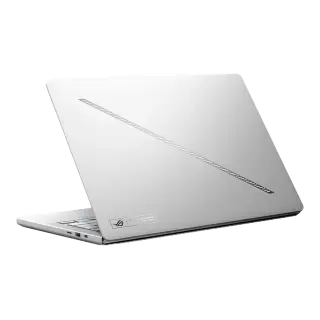
MaterialsT6 CNC anodized aluminum unibodyCNC-machined aluminum with Slash Lighting array
KeyboardPer-key Razer Chroma RGB anti-ghostingSingle-zone RGB backlit chiclet keyboard
TrackpadXL precision glass trackpadExtra-large glass touchpad
Webcam1080p FHD IR with Windows Hello1080p FHD IR camera with Windows Hello
Speakers4-speaker array with THX Spatial Audio6-speaker system (4 woofers, 2 tweeters) with Dolby Atmos

Ports

6 differences
Ports specifications. Middle column is Razer Blade 16 (2024), right column is ASUS ROG Zephyrus G14 (2024).
Thunderbolt / USB-C1× Thunderbolt 4 + 1× USB-C 3.2 Gen 21× Type-C USB4, 1× USB 3.2 Gen 2 Type-C (DisplayPort/PD), 2× USB 3.2 Gen 2 Type-A
HDMIHDMI 2.11× HDMI 2.1 FRL
SD cardUHS-II SD card reader1× UHS-II MicroSD card reader
MagSafeNoASUS Slim Power Jack
Headphone jackYes (3.5 mm)Yes (3.5 mm combo audio jack)
Charger280W GaN power adapter180W Slim AC Adapter / 100W USB-C PD

Battery

leads 1-0
Battery specifications. Middle column is Razer Blade 16 (2024), right column is ASUS ROG Zephyrus G14 (2024).
Claimed battery lifeNot on the official sheet~4–6 hours mixed useUp to 10 hours productivity / ~1.5 hours gaming (wins this row: higher)

Software

2 differences
Software specifications. Middle column is Razer Blade 16 (2024), right column is ASUS ROG Zephyrus G14 (2024).
Operating systemWindows 11Windows 11 Home
RepairabilityHigh (Dual RAM and dual SSD slots upgradable)Moderate (M.2 SSD and Wi-Fi replaceable)
Most rows are from the official spec sheet. Marked rows are other published figures or our summary, not lab tests we ran.

Which one should you buy

Pick this one if

Razer Blade 16 (2024)

Ultra-premium gaming laptop featuring dual-mode Mini-LED display (4K 120Hz / FHD 240Hz) and RTX 4080 graphics.

  • Dual-mode Mini-LED panel switches between 4K 120Hz and FHD 240Hz
  • Powerful NVIDIA RTX 4080 in a slim CNC aluminum chassis
  • Dual SO-DIMM RAM slots and dual M.2 SSD slots are user-upgradable

What you give up

  • High price tag and short battery life
  • Chassis warms up noticeably under continuous gaming loads

Pick this one if

ASUS ROG Zephyrus G14 (2024)

14-inch compact gaming laptop with AMD Ryzen 9, NVIDIA GeForce RTX 4070, and 3K 120Hz OLED ROG Nebula display.

  • Class-leading 3K 120Hz OLED gaming display
  • Compact CNC aluminum chassis under 3.3 lb
  • Strong gaming performance with RTX 40-series GPU

What you give up

  • Soldered RAM (no SO-DIMM expansion slots)
  • Fan noise gets loud under intense gaming loads

Best for each use

Travel

In a bag every day: weight, battery, a screen you can read on a train

For travel, buy the ASUS ROG Zephyrus G14.

  • Leads 3 of 4 rankable travel specs; Razer Blade 16 takes 1.
  • Claimed battery life: Up to 10 hours productivity / ~1.5 hours… vs ~4–6 hours mixed use
  • Weight: 3.31 lb vs 5.4 lb
  • It is also $1,400 cheaper.

Heavy work

Video, 3D, compiles or games: CPU, GPU, memory and panel quality

Too close to call on heavy work from the spec sheets. Only memory is rankable here.

  • Processor: Intel Core i9-14900HX vs AMD Ryzen 9 8945HS
  • Graphics: NVIDIA GeForce RTX 4080 vs NVIDIA GeForce RTX 4070 Laptop GPU

Longevity

Keep it five years: upgradable parts, repairability, ports without dongles

Too close to call on longevity from the spec sheets. Only ram upgradable is rankable here.

  • Storage upgradable: Yes vs Yes
  • Repairability: High vs Moderate

Every answer above is scored from published figures. A lens uses only the rows that matter for that use, including marked rows that are not on the official sheet. Switch lenses interactively in the panel above.

Done deciding?

Open the full standalone spec sheet for either device.

Manufacturer pages: Razer Blade 16 (2024) · ASUS ROG Zephyrus G14 (2024)

Common questions

Which is cheaper, the Razer Blade 16 or the ASUS ROG Zephyrus G14?

ASUS ROG Zephyrus G14 costs $1,400 less at list price.

What is the biggest catch with the Razer Blade 16 or ASUS ROG Zephyrus G14?

Both has this deal-breaker: no touchscreen. No pen or touch input for marking up PDFs or sketching.

Which is better for travel, the Razer Blade 16 or the ASUS ROG Zephyrus G14?

For travel, buy the ASUS ROG Zephyrus G14. Leads 3 of 4 rankable travel specs; Razer Blade 16 takes 1. Claimed battery life: Up to 10 hours productivity / ~1.5 hours… vs ~4–6 hours mixed use

What cannot be compared from spec sheets?

Of the 29 specs tracked here, 21 are descriptive and cannot be ranked on numbers alone. Spec sheets also cannot measure subjective factors like build quality, real-world performance, or comfort.

Other matchups