
Apple
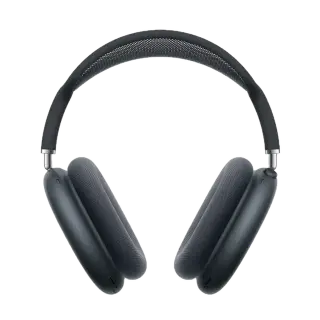
Apple AirPods Max (USB-C)
Headphones
$549List price
Explore this product Your shortlist, side by side
Find the differences that matter for your next decision.
Headphones
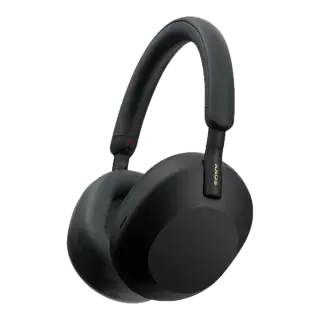
Headphones
Start with all rankable specifications, or focus on a particular use.
Your starting point
We compare the published specifications relevant to your priority. Each rankable specification counts once; your selected requirements can rule a product out. This is a guide to the numbers, not a laboratory performance score.
Battery life: 30 hours vs 20 hours
It is also $150 cheaper.
The trade-off to know
Sony WH-1000XM5: Headband does not fold into compact ball (swivels flat only)
Look at the differences ↓Side by side
Start with the key specs, then explore as much as you need.
| What you’re comparing | Apple AirPods Max (USB-C) | Sony WH-1000XM5 |
|---|---|---|
| WeightDesign | 384.8 g (13.6 oz) | 250 g (8.8 oz) |
| FoldableDesign | No (swivels flat) | No (swivels flat into case) |
| Carrying caseDesign | Smart Case included (low-power state trigger) | Collapsible hard-shell zip travel case included |
| Active Noise CancellingAudio | Yes (Pro-level Active Noise Cancellation with dual H1 chips) | Yes (Dual Processor V1 + HD QN1 with 8 microphones) |
| Battery lifeConnectivity & Battery | 20 hours (ANC + Spatial Audio enabled) | 30 hours (ANC on) / 40 hours (ANC off) |
Showing 5 of 14 specifications. Missing values stay unlisted. About the sources
Both sides of the decision
Beyond the spec sheet
Explore the ownership details available for this pair.
Ergonomic factors that affect daily comfort, glasses wearers, and luggage space.
Folding & Travel Packability
Swivels flat only; Smart Case leaves headband exposed
Swivels flat only (larger case, does not fold inward)
Clamp Force & Glasses Comfort
Firm clamp force (~5.2 N; steel & aluminum)
Balanced clamp force (~4.4 N, synthetic leather)
Weight & Crown Pressure
385g (heavy; noticeable neck load after 2 hours)
250g (featherweight on crown)
Documented ergonomic quirks, hardware annoyances, and maintenance realities reported by real owners.
Apple: What to watch for
Heavy 385g weight creates neck fatigue during long flights.
Smart Case offers virtually zero physical drop or travel protection.
Condensation buildup inside earcups under mesh cushions.
Sony: What to watch for
Non-folding headband takes up significantly more backpack space.
Auto-NC Optimizer cannot be manually locked to maximum.
Matte plastic coating shows greasy finger smudge marks easily.
Know what’s behind the comparison
Clinchmark compares manufacturer specifications and other published information. We have not independently lab-tested these products. Editorial assessments and unknown values are identified in the specification details.
Catalog snapshot: September 1, 2026. Prices, availability, and provider terms can change.
Sony WH-1000XM5 costs $150 less at list price.
Both has this deal-breaker: does not fold. Takes a bigger slot in a carry-on.
For flights & commutes, buy the Sony WH-1000XM5. Leads 2 of 2 rankable flights & commutes specs. Battery life: 30 hours vs 20 hours
Of the 14 specs tracked here, 11 are descriptive and cannot be ranked on numbers alone. Spec sheets also cannot measure subjective factors like build quality, real-world performance, or comfort.